SPOKEN DANCE

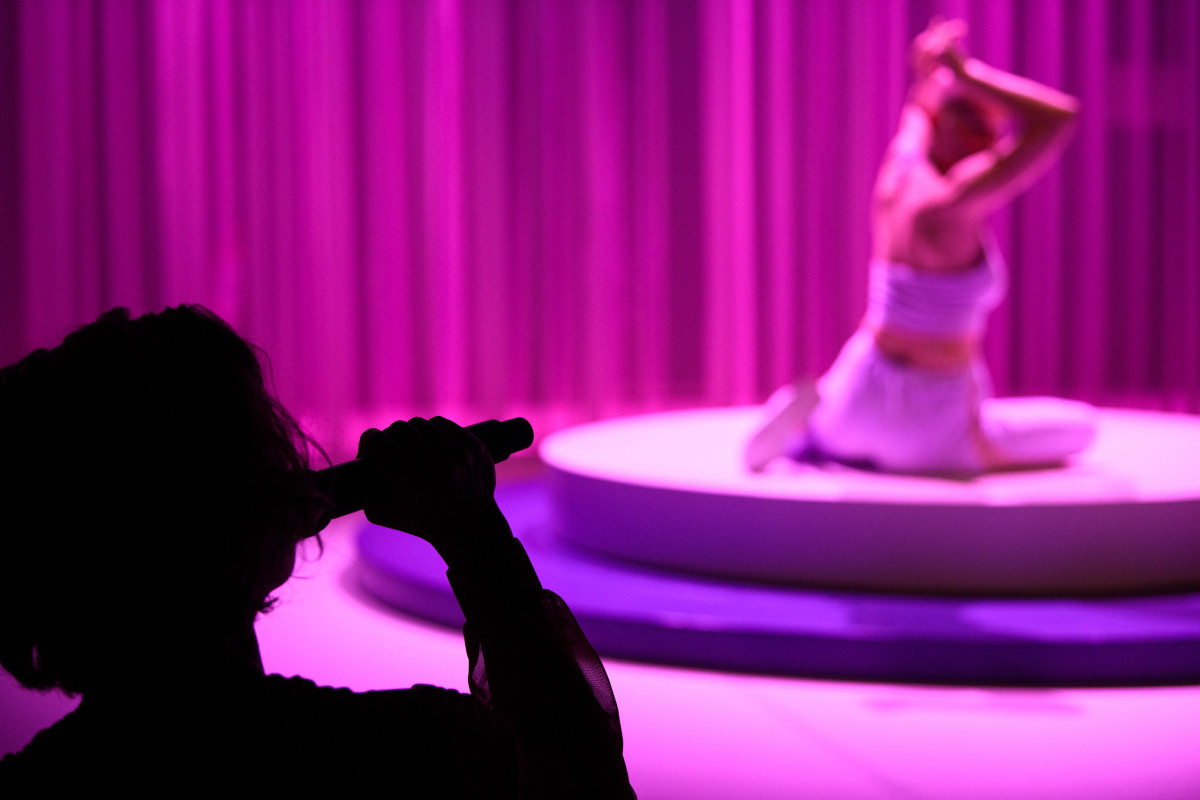
SPOKEN DANCE is a collective and collaborative project dedicated to artistic audio description in contemporary dance and performance. The project has existed since 2021 and is funded from 2025 to 2027 through the production-independent funding programme of the Department of Arts and Culture of the City of Munich and in cooperation with HochX Theater & Live Art. Since its beginning, the project has been realised in the cities of Hamburg and Munich, while also engaging in national and international networking and exchange. This takes place through workshops, lectures, regular dance classes, joint theatre visits, post-show discussions, discussion formats, artistic laboratories, and residencies. These activities are primarily aimed at blind and visually impaired people and in some cases also invite sighted participants and collaborators.

Audio description is the verbal description of bodies, movements, situations, and everything that happens on stage. In SPOKEN DANCE, audio description is explored as an artistic aesthetic of accessibility and as an artistic form of access.

SPOKEN DANCE is a project initiated by blind and sighted dance practitioners. Its aim is to organise regular meetings to move together, get to know contemporary dance and other dance forms, and jointly research how dance can be described through words.

Would you like to join our WhatsApp group and stay up to date?
Then feel free to send us an email at: contact@rykenajuengst.com

Upcoming dates

11 February 2026, 6:30–9:00 pm
Kulturzentrum LUISE, Munich
Home pick-up possible, or meeting at 6:15 pm at Poccistraße underground station
18 March 2026, 6:30–9:00 pm
Kulturzentrum LUISE, Munich
Home pick-up possible, or meeting at 6:15 pm at Poccistraße underground station

22 April 2026, 6:30–9:00 pm
Kulturzentrum LUISE, Munich
Home pick-up possible, or meeting at 6:15 pm at Poccistraße underground station

13 May 2026, 6:30–9:00 pm
Kulturzentrum LUISE, Munich
Home pick-up possible, or meeting at 6:15 pm at Poccistraße underground station

17 June 2026, 6:30–9:00 pm
Kulturzentrum LUISE, Munich
Home pick-up possible, or meeting at 6:15 pm at Poccistraße underground station

15 July 2026, 6:30–9:00 pm
Kulturzentrum LUISE, Munich
Home pick-up possible, or meeting at 6:15 pm at Poccistraße underground station

30 September 2026, 6:30–9:00 pm
Kulturzentrum LUISE, Munich
Home pick-up possible, or meeting at 6:15 pm at Poccistraße underground station

28 October 2026, 6:30–9:00 pm
Kulturzentrum LUISE, Munich
Home pick-up possible, or meeting at 6:15 pm at Poccistraße underground station

25 November 2026, 6:30–9:00 pm
Kulturzentrum LUISE, Munich
Home pick-up possible, or meeting at 6:15 pm at Poccistraße underground station

Würdest du lieber…?


Choose your own adventure from rather for everyone starting at 3 years

You step through the green door with your dog, the milk is there like every morning – everything appears familiar. But on the next page, the chaos starts: does your house sink in water or in snow? Would you rather be crushed by a snake or eaten by a crocodile? Get lost in fog or in a crowd? Which would you rather?

You remember a time in your life when everything was new and in flux, and you were simply busy turning the world around you into stories. Everything was in flux — clothes became toys, toys became instruments, instruments became dangerous animals… In this way, the transdisciplinary cast of “Würdest du lieber…?” invents a universe in which different ways of being and relating to each other and to the world can be experimented with.

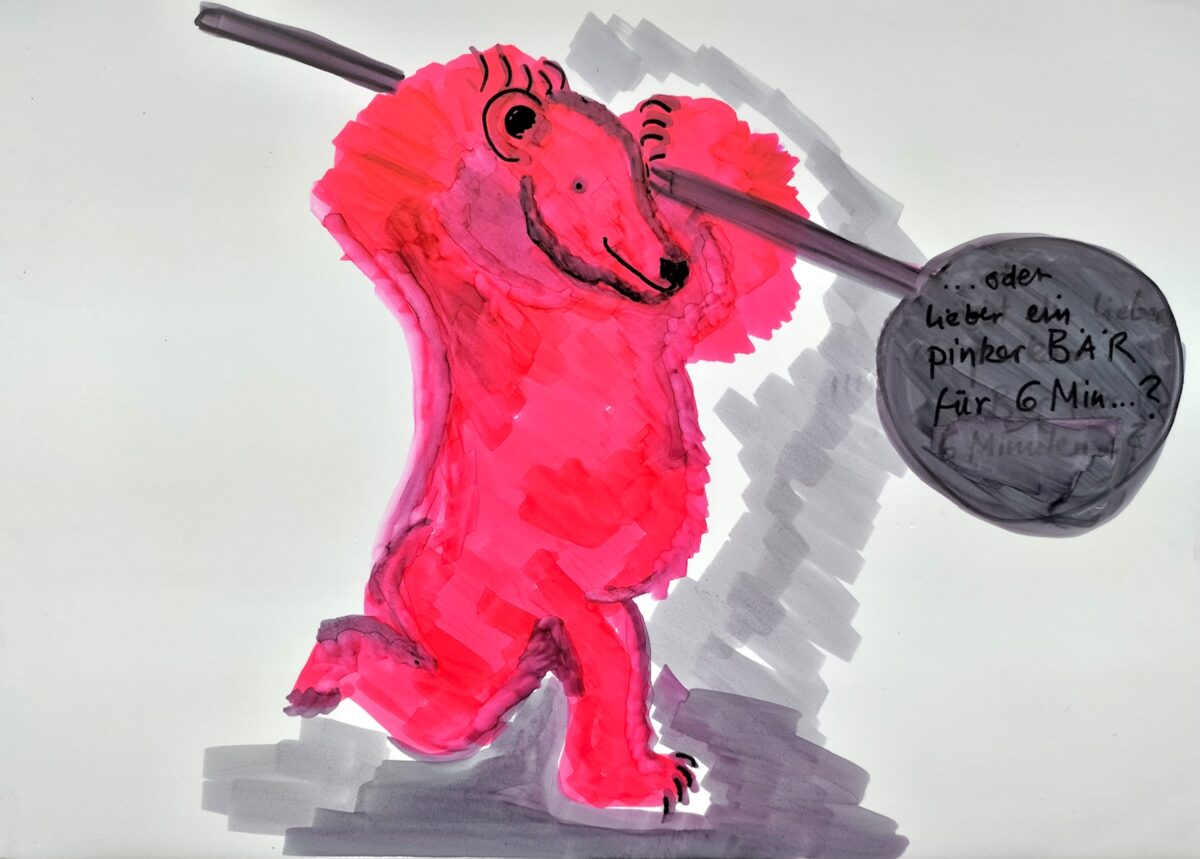
Inspiration comes from John Burningham’s classic picture book Would You Rather…?. Sound artist Tim Helbig creates animal soundscapes, performer Fatima Dramé writes new songs just for you, and actresses Luisa Wöllisch, Gina-Lisa Maiwald, and Judith Huber guide you through a parkour of scenes featuring mud races, witch’s broth, and balloon flights. Or would you rather just dance with a pink bear?

Würdest du lieber…? seeks a playful and autonomous approach to the complex process of decision-making on an equal footing with young children. As a scenic adventure with poetic quirks and guided courage, the performance stimulates the audience’s playfulness and opens up space for new narratives. An adventure to marvel at, participate in, and try out. Language, images, and music are equal carriers of the story.

STRIPPING BOLERO

Based on Maurice Ravel’s musical composition Bolero, which is both a permanent crescendo and pure ecstasy, Rykena/Jüngst embarks on a playful and sensual search for choreographic forms of climax in her new production STRIPPING BOLERO.

The piece plays with climaxes, breaks them down, reassembles them, and weaves together set pieces from well-known dramas, dance history, and the staging of climax in striptease. Through dance, sign language, sign language poetry, audio description, and erotic storytelling, a multi-sensory performance emerges in which teasing and sensuality become the aesthetics of access and invitation: the theater space intensifies, tension is maintained, dissolves, climaxes shift, bodies fall to the ground or tell stories backwards.

IMAGE DESCRIPTION

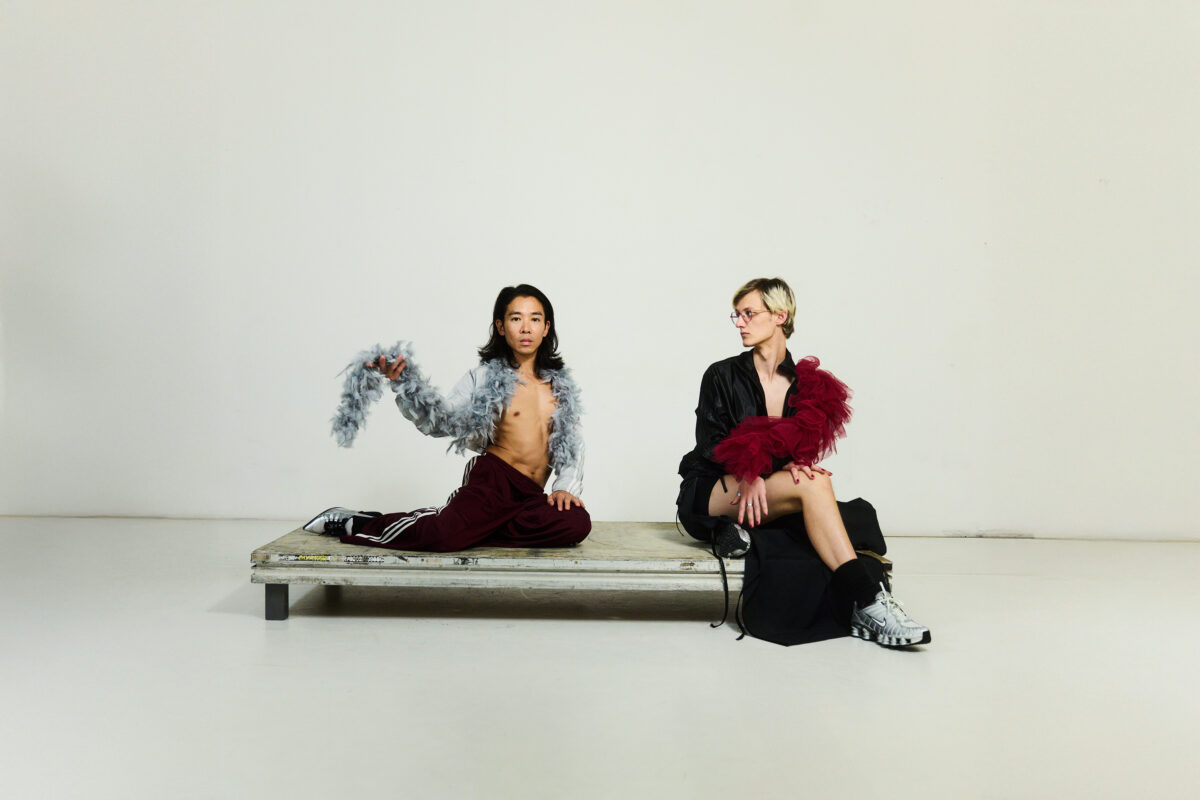
The photo shows two performers from Stripping Bolero sitting on a low, simple platform in a white, empty room.

Raymond (he/him) is sitting on the left. He has white, sun-tanned skin and shoulder-length dark hair. Raymond is wearing burgundy sweatpants, an open jacket with a gray feather boa around his neck, and pointed silver high heels. His posture is elegant and confident. He is looking directly into the camera—one arm is raised as if he is playing with the fluffy fabric.

Emil (he/him) is sitting on the right. He has pale white skin, short blond hair, and wears glasses. His legs are casually crossed, and he wears a black jogging suit with wide-open leg slits and red tulle stripes on the arms, as well as light silver sneakers. His fingernails are painted a striking bright red. Emil looks at Raymond defiantly and with interest.

Galaxie der Empathie

Participatory theatre and installation by Initiative Ausstellungspark

“If I could always be by your side until the end of time. If I could tell you at every moment that you are not alone. I am here. And if I could hug you every time. And tell you: I love you so much. Thank you” (Mireille Ntamwete)

What would a place where we would like to grow old look like – a place where care is not only necessary, but a lively give and take? A space where closeness, respect and community grow, where we are there for each other, without fear and with a great deal of humanity? The latest project by Initiative Ausstellungspark after ‘The Ultimate Caregivers Playlist’, is an invitation to this place.

THIS PLOT IS NOT FOR SALE

At the heart of this multi-lingual theatrical collage that deals with post-colonial power relations, remembrance politics, and identity, is a trio of characters whose perspectives could not be more different: Stevan, a Serbian photographer with a mysterious “camera absurda”; Pete, an ambitious middle-class Kenyan; and Kathi, a German heiress in possession of a serious post-colonial guilt complex. All three wish to wield the camera in service of their own individual purpose – and as a result find themselves wrestling with the nature of interpretative sovereignty as it pertains to both past and future. But the camera then begins to take on a life of its own …

Drawing on their own individual cultural and social contexts, Denijen Pauljević, Gisemba Ursula, and Theresa Seraphin have created a multi-layered grotesquerie, a performance that lays bare each participant’s own entanglement within global power structures. In this work, documentary material meets absurdist theatre, and historical re-enactments meet speculative visions of the future. Elements that initially seem obvious prove to be part of a complex interweaving of identities, role models, and attributions. Who does history belong to – and who will enact the future?

Mother Tongue

Everybody has a mother tongue. In Mother Tongue, performer Kathrin Knöpfle combines a participatory installation with live performances in five spaces of experience and with her team, presents themes like family influence, colonialism, racism and gender roles in an artistic arrangement in which audience members can move freely. Familiar stage situations are dissolved, offering space for personal reflection. Mother Tongue invites people with migration experience, feminist attitudes and an interest in social criticism, as well as anyone who wants to explore the phenomenon of ‘mother tongue’ in the ‘fatherland’, to engage in exchange.

YOLDAŞ – Women Holding Each Other

by Nihan Devecioğlu

“We’re the ones who made BMW what it is today,” says Emine Ulusen, who worked at the BMW factory in Munich for 38 years. Along with Evgenia Karakolidis and Anayurt Kırımlı, she belongs to the first generation of Germany’s “Gastarbeiter”, or “guest workers”. They are “yoldaş” – friends and companions. They have spent the majority of their lives working at the BMW factory, where they have experienced periods of speechlessness, mental fatigue, and the exhausting physical labour that factory work entails. Singer Nihan Devecioğlu grew up near the BMW factory as the granddaughter of Turkish labourers. With this piece, she seeks to create a space for remembrance that is both poetic and musical in nature – one that honours both her childhood in Munich in the 1980s, as well as the women whose labour remains invisible to this day. The voices of women come together with the sounds of machines and documentary film material to form a vivid collage that also functions as a chronicle of self-empowerment and female solidarity.

MUJE

by ZINADA

“MUJE” means ‘untitled poem’ in Korean and also describes the ‘fog on a distant sea that appears like land’ – an illusion of the tangible and yet intangible. This idea of something infinite, vast and distant, which nevertheless seems familiar to us, permeates the entire performance by the duo Zinada. MUJE is in search of another new perception of harmony, a harmony full of dissonance that seeks to change our view of human coexistence.

 The structure of MUJE is inspired by jazz improvisation. As in jazz solos, the four performers search for an expression of their personality through their “instruments”, which is sometimes interrupted, overlaps, forms a duet and constantly transforms. Dance, live music and light move through this landscape of dissonance like jazz musicians, with constantly changing rhythms and movements. The performers remain as individuals and yet together they create something new, something cohesive.

 The piri and taepyeongso, two traditional Korean wind instruments, are a central component of MUJE’s soundscape. The instruments are deeply rooted in the Korean musical tradition and are inextricably linked to shamanistic rituals. In MUJE, this ritual quality is taken up not only in the sound, but also in the choreography/movement.

 In its exploration of coexistence through dissonance, MUJE becomes a metaphor for the complexity of human relationships. Can harmony only emerge if we recognize and accept the beauty in dissonance instead of trying to smooth over differences? In a multi-layered interplay of sound, light and movement, MUJE invites the audience into a space of discomfort and invites them to celebrate the unknown, the unsettling and the relentless search for a balance that may never be fully achieved.

To B.E.

by Cristina D’Alberto

To B.E.” is a performative work that explores the multifaceted nature of the artists’ relationship with mothering. Drawing from her experiences of pregnancy, childbirth, and motherhood, the piece delves into the complexities of fearing the passage of time, desiring to be fully present in the moment, and the process of capturing, honoring, and experiencing time itself.
The performance explores the intricate tapestry of caregiving, challenging the stigmas that western society often attaches to traditional, patriarchal notions of motherhood. Through a set score of movements and emotive gestures, the dancer embodies the complex emotions that arise when a woman transitions into the role of mother.
The choreography portrays the amplification of ambivalence – a push and pull between societal expectations and personal desires. The performer weaves through space and inside states mirroring the internal struggle many women face in their new maternal role.
To B.E is a dance installation that merges movement exploration with immersive soundscapes and videoscapes, inviting the audience to navigate a space where intimate and ephemeral moments reveal what lies deep within. “To B.E.” is a ritual that honors the present with both gratitude and fear, a dedication of love for both the creator and who is created. It is an experience intended to be shared.

Everything That Is Wrong With Me

The latest dance performance by Jasmine Ellis Projects Everything That Is Wrong With Me explores the intersection of identity and creativity. It celebrates the richness of neurodiverse perspectives with the concept of ‘radical softness’. Vulnerability is used as a powerful artistic tool; delicate and dynamic movements embody the complexity of human experience. With six dancers and live music by Olicía and Lukas Bamesreiter, the piece creates a multi-sensory journey that challenges social norms and redefines our understanding of normality and deviance.

Image description: The portrait photo in sepia coloring has a fine orange-red frame. It shows a close-up of the two dancers Jacob and Charles. Jacob is looking directly into the camera. He wears a cajal, a small moustache, a white costume and tattoos on his neck. In a pose that we can’t quite make out, he holds Charles’ naked back, on which you can also see his many freckles even with the sepia coloring.